
Currently Empty: $0.00

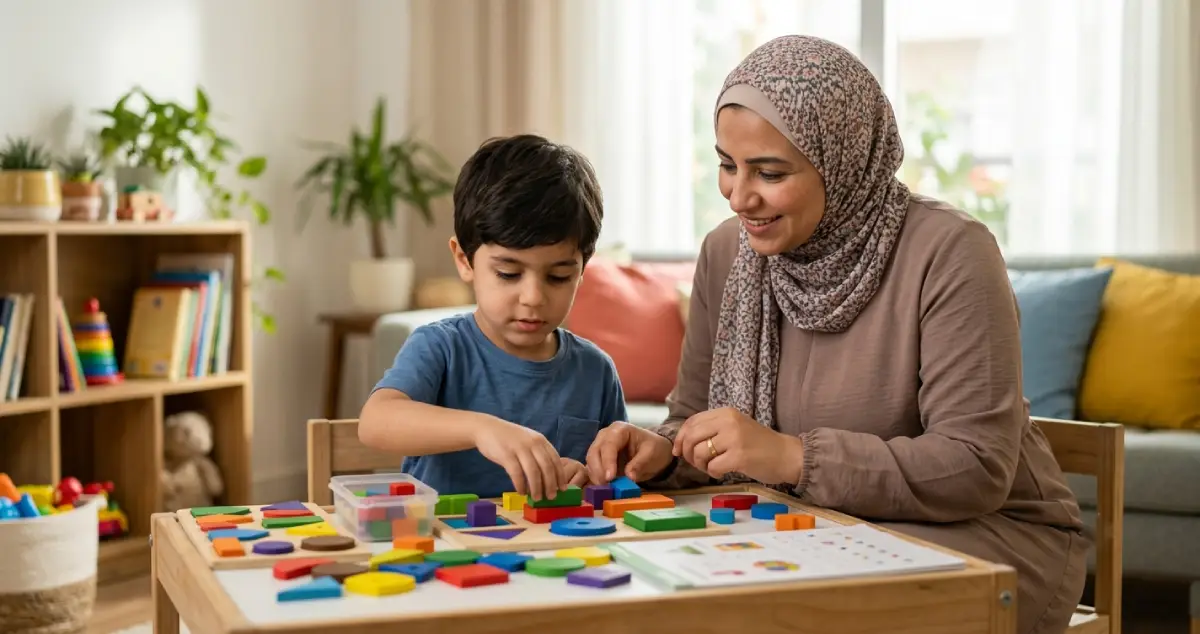
If your child starts an activity but quickly loses interest, needs you to repeat instructions over and over, or forgets what you asked just a few seconds later, you’re probably wondering:
Is this just normal distraction?
Or does my child actually need help?
And is there anything I can do at home before every homework session or daily task turns into a struggle?
Attention problems are one of the most common challenges parents face because they don’t always look the same. Sometimes a child seems uninterested. Other times they come across as stubborn. And sometimes they can stay focused for a game they love, but can’t pay attention to homework or simple daily instructions.
This guide will help you understand attention problems in children in a practical, easy-to-follow way. It also shares simple strategies you can use at home to build your child’s focus without pressure and without turning every activity into a battle.
A Quick Summary for Busy Moms
If you don’t have time to read the whole article right now, here’s the most important takeaway:
A child’s attention problems don’t always mean they are being disobedient or that you’re doing something wrong as a parent. In many cases, children simply need to build their focus step by step, just like they learn to read, write, or keep their room organized.
Start with these five simple rules:
- Keep focus sessions very short.
- Reduce distractions around your child.
- Give one-step instructions.
- Start with an easy task so they can feel successful.
- Praise the effort to stay focused, not just the final result.
If your child’s attention problems happen most days and are affecting school, daily routines, or family life, it’s better to follow a clear plan instead of relying on trial and error.
What Are Attention Problems in Children?
Attention problems in children mean that a child has difficulty staying focused on an activity, instructions, or a task for a length of time that is appropriate for their age.
You might notice this in everyday situations, such as when your child:
- Starts playing but gives up after a minute.
- Forgets instructions almost as soon as they hear them.
- Jumps quickly from one activity to another.
- Needs the same instructions repeated several times.
- Gets lost or distracted while doing homework.
- Frequently misplaces school supplies or personal belongings.
- Doesn’t finish what they started.
- Seems like they’re not listening, even though their hearing is perfectly normal.
- Gets distracted by every sound or movement around them.
- Can focus well on activities they enjoy but struggles to pay attention to tasks they’re expected to do.
The important thing to remember is that focus isn’t something a child can simply switch on.
Concentration is a skill that develops over time. It grows with practice and is influenced by many factors, including a child’s age, sleep, daily routine, environment, emotional well-being, and even the way instructions are given.
Does Attention Problems Mean My Child Has ADHD?
Not necessarily.
Every child gets distracted from time to time, especially when they’re tired, hungry, excited, or surrounded by lots of stimulation. But if the lack of focus is ongoing and starts affecting life at home, school, or relationships, it may be worth having your child evaluated by a professional to understand what’s causing it.
ADHD (Attention-Deficit/Hyperactivity Disorder) is a neurodevelopmental condition that can involve difficulties with attention, impulsive behavior, and hyperactivity. However, it can’t be diagnosed based on a single situation, an online article, or a simple home assessment.
As a parent, the most helpful questions to ask yourself are:
- Is this just a temporary phase, or does it happen regularly?
- Does it only happen when my child is tired or overwhelmed?
- Or does it show up in most situations?
- Is it affecting learning, daily routines, or family life?
- Are teachers noticing the same difficulties at school?
If you answered yes to several of these questions, it’s a good sign that you may need a clearer plan instead of simply waiting to see if things improve. At that point, it’s worth considering an evaluation by a qualified professional to better understand what’s going on and determine the best way to support your child.
Why Do Children Get Distracted? Common Causes Explained Simply
There isn’t always one single reason why a child struggles with attention. In many cases, it’s a combination of different factors.
1. Age and Brain Development
A 4-year-old simply can’t focus the same way a 9-year-old can.
And a 9-year-old shouldn’t be expected to manage time like a teenager.
That’s why it’s important not to compare your child with an older sibling or a classmate. Every stage of development comes with its own ability to pay attention, wait, and complete tasks.
2. Too Many Distractions
Sometimes the problem isn’t the child it’s the environment.
Imagine a child trying to do homework while there’s:
- Toys on the table.
- A screen nearby.
- The TV playing in the background.
- Siblings moving around.
- A parent giving multiple instructions at once.
- Too many supplies spread out in front of them.
In that situation, even a child with good attention can become distracted.
A calm, organized space isn’t a luxury—it’s an important part of helping children build focus.
3. Instructions That Are Too Long
Some children lose focus simply because the instructions are longer than they can process.
For example:
“Go to your room, clean up your toys, grab your backpack, put your book inside, don’t forget your pencil, then come back so we can start your homework.”
That’s a lot to remember.
Instead, try giving one simple instruction at a time:
- “Bring your backpack.”
- Once that’s done: “Open your book.”
- Then: “Let’s do the first question.”
The shorter the instruction, the more likely your child is to follow through.
4. The Task Is Too Easy or Too Hard
A child may stop an activity because it’s too easy and becomes boring, or because it’s too difficult and feels overwhelming.
Parents often say, “My child just can’t focus.”
But sometimes the real issue is that the activity doesn’t match the child’s current skill level.
1.When a task is too difficult, children may avoid it.
2.When it’s too long, they may become restless.
3.When it’s unclear, they may keep asking questions or refuse to do it.
5. They Need to Move First
Some children need physical movement before they’re ready to sit and concentrate.
Not every child can go straight from running, playing, or using a screen to sitting down for homework.
Many children need a transition—a short movement activity or a quick game—before they can settle into a focus task.
Instead of saying, “Sit down right now,” try giving them two minutes of structured movement first, then move into a short learning activity.
6. Lack of Sleep or an Unstable Routine
Sleep has a huge impact on attention.
A child who isn’t getting enough quality sleep may show signs like:
- Poor concentration.
- Irritability.
- Extra physical activity or restlessness.
- Crying more easily.
- Resisting instructions.
- Struggling with homework.
Before assuming there’s a bigger problem, take a look at your child’s sleep schedule, screen time before bed, wake-up time, and overall daily routine.
7. Stress or Anxiety
Sometimes children seem distracted because they’re anxious, not because they don’t care.
An anxious child may be thinking things like:
- “I’m going to make a mistake.”
- “Mom will get upset.”
- “My teacher will be disappointed.”
- “I can’t do this.”
- “I’m going to fail.”
From the outside, they may look distracted, but inside they’re overwhelmed.
In these moments, children need reassurance, encouragement, and emotional support—not more pressure.
When Is a Child’s Distractibility Considered Normal?
In many cases, occasional distractibility is completely normal, especially if it:
- Only happens when your child is tired or hungry.
- Shows up after a long period of studying or concentrating.
- Improves when activities are kept short.
- Happens only in certain situations.
- Doesn’t have a major impact on school, friendships, or family life.
- Gets better when you reduce distractions around your child.
- Doesn’t lead to daily struggles or constant conflicts at home.
If this sounds like your child, you can start with a few simple strategies at home and watch for improvement over the next two to four weeks.
When Does Your Child Need a Clearer Plan or Professional Support?
It may be time to take a more structured approach if your child’s attention problems:
- Happen on most days.
- Interfere with homework or learning.
- Lead to daily arguments or constant frustration at home.
- Make it difficult for your child to finish almost any activity.
- Show up both at home and at school.
- Affect relationships with siblings or friends.
- Lower your child’s confidence or self-esteem.
- Leave you feeling like you’re repeating the same instructions all day long.
- Come with significant impulsive behavior or frequent emotional outbursts.
- Don’t improve even after reducing distractions and giving simpler instructions.
If several of these signs are present, it doesn’t automatically mean your child has a specific diagnosis. It simply means they may benefit from a more structured plan and additional support to better understand and address their needs.
How Do Attention Problems Look at Different Ages?
Ages 3–6
At this age, attention difficulties may look like this:
- Quickly moves from one toy or activity to another.
- Has trouble finishing even simple activities.
- Finds it difficult to wait for their turn.
- Frequently gets up from the table.
- Needs very short, simple instructions.
- Keeps moving around while someone is talking.
- Quickly forgets what they were asked to do.
At this stage, the goal isn’t to expect your child to sit still for 30 minutes.
The goal is to help them focus for just a few minutes at a time, then gradually increase that time as their attention skills develop.
Ages 7–9
At this stage, school and homework become a bigger part of daily life, so attention difficulties often become more noticeable.
You may notice that your child:
- Forgets homework assignments.
- Frequently loses school supplies.
- Starts asking a question but loses focus halfway through.
- Reads a question without understanding what it’s asking.
- Needs constant supervision to stay on task.
- Leaves homework unfinished.
- Complains about any written assignment.
At this age, the goal is to teach your child how to get started, break tasks into smaller steps, and learn how to refocus after getting distracted.
Ages 10–13
As children get older, attention problems may show up less as constant movement and more as difficulties with organization.
You might notice that they:
- Procrastinate a lot.
- Don’t know where to begin.
- Forget appointments or deadlines.
- Leave projects until the last minute.
- Feel overwhelmed by schoolwork.
- Get distracted by their phone or video games.
- Resist help because they want to be more independent.
At this stage, children need practical organizational tools, not just reminders or instructions.
Ages 14–17
For teenagers, attention difficulties often appear as problems with planning, organization, and following through.
You may notice:
- An irregular sleep schedule.
- Constant procrastination.
- Excessive screen time.
- Difficulty getting started with studying.
- Anxiety before exams.
- A lack of motivation.
- Resistance to direct advice.
- Frustration or anger when reminded about responsibilities.
At this age, it’s important to treat teens with respect and avoid talking down to them. Instead of forcing a plan on them, involve them in creating one together. This gives them a greater sense of ownership and makes them more likely to stick with it.
Practical Ways to Reduce Attention Problems at Home
These simple strategies are a great place to start, especially if your child needs a little daily practice to build better focus.
Step 1: Start with Very Short Focus Sessions
Don’t tell your child, “Sit and focus for 30 minutes.”
Instead, match the focus time to their age:
- Ages 3–6: 3–5 minutes.
- Ages 7–9: 7–10 minutes.
- Ages 10–13: 10–15 minutes.
- Ages 14–17: 15–25 minutes, followed by a clear break.
The goal isn’t to make the session longer.
The goal is to help your child feel successful.
Once they can manage a short session consistently, you can gradually increase the time.
Step 2: Follow the “One Thing at a Time” Rule
During homework or any focused activity, put only one thing in front of your child.
- Don’t lay out every supply.
- Don’t leave all the toys within reach.
- Don’t open several books at once.
- Don’t explain multiple tasks together.
For example:
- Instead of giving them the whole box of crayons, offer just two colors.
- Instead of placing 20 flashcards on the table, start with five.
- Instead of saying, “Finish the whole page,” say, “Let’s do the first two questions.”
The less visual clutter there is, the easier it is for your child to stay focused.
Step 3: Give One Simple Instruction at a Time
Long instructions are easy to forget.
Keep each direction short and clear, such as:
- “Put the red block here.”
- “Write your name.”
- “Read the first line.”
- “Choose one card.”
- “Put away these five pieces.”
After your child finishes that step, give the next one.
This helps children feel in control instead of overwhelmed by a big, unclear task.
Step 4: Start with an Easy Task Before the Hard One
This is called an easy start.
Before asking your child to tackle something challenging, begin with a quick task they can finish successfully.
For example:
- Sort three cards.
- Write one word.
- Pick out your pencil.
- Open your workbook.
- Circle the first question.
A small success helps the brain shift into work mode and reduces resistance.
Many children who struggle with attention don’t just have trouble focusing—they have trouble getting started. That’s why the first step should be as small and manageable as possible.
Step 5: Praise Returning to the Task
Don’t only praise the final result.
If your child gets distracted but comes back to the activity, acknowledge that effort.
You might say:
- “I like how you came back and kept working.”
- “I noticed you tried to finish what you started.”
- “Great job staying with it for one more minute.”
- “I like how you listened and followed the instruction.”
This teaches the behavior you want to see more often.
The goal isn’t to raise a perfect child.
The goal is to help your child learn how to refocus after getting distracted.
A 7-Day Plan to Help Your Child Build Better Focus
Day 1: Observe When Your Child Gets Distracted
Pay attention to the times when your child struggles to focus the most.
Ask yourself:
- Before homework?
- During meals?
- While getting ready to go out?
- Before bedtime?
- After screen time?
- When following instructions?
Don’t try to change anything yet. Just observe the pattern.
Day 2: Reduce Distractions
Choose one quiet place for focused activities.
- Keep the table clear and simple.
- Turn off or move away screens.
- Place only one item or activity in front of your child at a time.
Day 3: Use a Short Timer
Set a timer for a short focus session based on your child’s age—usually three to five minutes for younger children.
Say, “Let’s stay focused until the timer goes off.”
The timer shouldn’t feel like a punishment.
Make it part of the game.
Day 4: Start with an Easy Activity
Choose something your child can complete successfully without much effort.
The goal is for them to think:
“I can do this.”
Day 5: Add a Small Challenge
Increase the difficulty just a little.
- If your child focused for 3 minutes yesterday, try 4 minutes today.
- If they completed one step easily, try giving them two steps.
Avoid jumping straight to long or difficult tasks.
Day 6: Praise Specific Behaviors
Instead of simply saying, “Good job,” be specific.
For example:
- “I liked how you waited patiently.”
- “I noticed you finished what you started.”
- “I liked how you came back after getting distracted.”
Specific praise helps children understand exactly what they’re doing well.
Day 7: Look Back at What Worked
Take a few minutes to reflect.
Ask yourself:
- Which activities held my child’s attention the best?
- When were they the calmest and most focused?
- What seemed to make distraction worse?
- Which instructions were easiest for them to follow?
- Would they benefit most from a Focus Box, a Routine Box, or a Sensory Regulation Box?
These observations will help you choose the next steps that best match your child’s needs.
If these strategies feel helpful but you’d like a clearer, more personalized plan, start with the free assessment.
It will help identify the box or program that’s the best fit for your child’s age, needs, and current challenges.
Structured Play Activities to Build Focus
Structured play doesn’t mean letting your child play randomly.
It means using play to strengthen a specific skill, such as listening, visual attention, taking turns, following directions, or completing a task.
Game 1: Color Hunt
Best for: Ages 3–7
Time: 3–5 minutes
Goal: Build visual attention
How to play:
Choose one color, such as blue.
Say, “Let’s find five blue things.”
Each time your child finds one, give them a point or offer some encouragement.
Make it more challenging:
For older children, give more specific instructions, such as:
- “Find something blue and small.”
- “Find something that’s red and round.”
Game 2: Listen and Do
Best for: Ages 4–9
Time: About 5 minutes
Goal: Improve listening skills and following directions
Start with one-step instructions, such as:
- “Clap once.”
- “Touch your head.”
- “Jump one time.”
- “Put the card here.”
As your child improves, gradually add another step:
- “Clap once, then sit down.”
- “Touch your head, then put the block in the box.”
- “Jump twice, then choose one card.”
If your child makes a mistake, don’t turn it into a test.
Simply smile and say, “Let’s try that again.”
Game 3: What’s Missing?
Best for: Ages 5–10
Time: About 5 minutes
Goal: Build memory and visual attention
Place four objects in front of your child.
Let them look at the objects for 10 seconds.
Ask them to close their eyes.
Remove one object.
Then ask, “Which one is missing?”
Make it more challenging:
- Add more objects.
- Ask your child to remember the order as well as the objects themselves.
Game 4: The Timer Challenge
Best for: Ages 7–13
Time: About 10 minutes
Goal: Practice completing tasks
Choose one very small task, such as:
- Organize five pencils.
- Solve two questions.
- Read a short paragraph.
- Write three words.
Set a short timer.
Say, “Let’s see if we can finish this step before the timer ends.”
The goal isn’t to create pressure or make it a race.
Keep it fun and encouraging.
Game 5: One Task Card
Best for: Ages 7–14
Time: Depends on the task
Goal: Reduce overwhelm by focusing on one step at a time
Write just one task on each card, for example:
- Open your notebook.
- Write today’s date.
- Solve the first question.
- Check your answer.
- Put your pencil in your backpack.
Once your child finishes one card, give them the next one.
This approach works especially well for children who become overwhelmed or distracted when they hear several instructions all at once.
Common Mistakes That Can Make Attention Problems Worse
Mistake 1: Giving Long Explanations
The more you talk, the more likely your child is to lose focus.
Instead of explaining everything at once, keep it short.
One clear sentence is often much more effective than a long lecture.
Mistake 2: Starting at the Wrong Time
If your child is hungry, tired, or has just finished a long screen session, it’s probably not the best time to work on focus.
Choose a time when your child is calm and more ready to participate, even if it’s only for a few minutes.
Mistake 3: Turning Every Activity into a Test
If your child feels that every activity is an evaluation or an opportunity to be corrected, they’ll naturally become resistant.
Let the first goal be enjoyment and engagement—not perfection.
Make it feel like play, not an exam.
Mistake 4: Comparing Your Child to Others
Saying things like, “Your brother pays attention better,” or “Other kids finish their homework without a problem,” won’t improve your child’s focus.
In most cases, it only leads to frustration and resistance.
Instead, compare your child to their own progress.
For example:
“Yesterday you stayed focused for three minutes. Today you did five. That’s real progress.”
Mistake 5: Giving Too Many Tasks at Once
Children who struggle with attention do better when tasks are presented in a clear sequence.
Keep it simple:
- One task.
- One step.
- A short amount of time.
Then move on to the next step.
Mistake 6: Expecting Complete Stillness
Some children actually focus better when they’re allowed a small amount of movement.
For example, they may concentrate more easily if they:
- Squeeze a small stress ball.
- Stand while answering questions.
- Take short movement breaks between tasks.
The goal isn’t for your child to sit perfectly still.
The goal is to help them learn how to finish a task in a way that works best for them.
If your child’s attention problems are creating daily stress and frustration, don’t feel like you have to start over every day.
Take the free assessment to get a personalized recommendation based on your child’s age, needs, and the type of support that may help them most.
When Can a Focus Box Be Helpful?
A Focus Box can be a great option when parents want a practical, structured approach instead of searching for new activities every day.
It may be a good fit if your child:
- Gets distracted easily.
- Leaves activities before finishing them.
- Needs repeated reminders or instructions.
- Resists doing homework.
- Has trouble staying still during tasks.
- Struggles to follow directions.
- Loses interest quickly.
- Learns better with hands-on tools than with verbal instructions alone.
One of the biggest benefits of a Focus Box is that it turns practice into clear, organized steps. Instead of creating activities from scratch each day, parents have ready-to-use tools that make it easier to support their child’s progress.
What Might a Focus Support Box Include?
Depending on the child’s age and the type of box, it may include:
- Short printed activities.
- Visual attention games.
- Follow-the-instruction games.
- Task cards.
- Simple sensory tools.
- A parent guide.
- A short implementation plan.
- A progress tracker.
- QR codes linking to instructional videos.
- Daily play ideas.
- WhatsApp support or a guidance call, depending on the package.
The number of materials isn’t what matters most.
What makes the biggest difference is knowing how to use each tool, when to use it, and which skill it’s designed to strengthen.
How Do I Know My Child Is Improving?
Don’t expect a dramatic change overnight.
Instead, look for small signs of progress, such as when your child:
- Stays focused for one extra minute.
- Needs fewer reminders.
- Returns to the task after getting distracted.
- Finishes one complete step.
- Follows instructions more easily.
- Shows less resistance.
- Starts asking, “What should I do next?”
- Feels proud of small accomplishments.
- Has less stressful homework sessions.
These small improvements are often the first signs that your child’s attention skills are developing.
When Aren’t Home Activities Enough?
Home-based activities can be very helpful, but they aren’t always enough on their own.
It’s a good idea to seek professional guidance if your child’s attention difficulties:
- Are very severe.
- Clearly affect school performance.
- Are accompanied by dangerous impulsive behavior.
- Come with significant anxiety or frequent crying.
- Lead to repeated daily emotional meltdowns.
- Occur alongside obvious learning difficulties.
- Don’t improve despite following a consistent plan.
- Are noticeable in more than one setting, such as both at home and at school.
This doesn’t automatically mean something is seriously wrong.
It simply means your child may benefit from a more thorough evaluation and the right kind of support.
Important Professional Note
The Play Therapy Box is designed to provide educational and behavioral support that helps children build important skills at home. It is not a medical diagnostic tool and should not be considered a substitute for psychological therapy, occupational therapy, or medical care when those services are needed.
This article is intended for educational purposes and to offer practical guidance for parents. If your child has severe symptoms, a previous diagnosis, or significant difficulties at school, it’s best to seek advice from a qualified healthcare or child development professional.
Final Thoughts: How to Get Started Today
Attention problems in children aren’t solved by raising your voice or repeating the same instructions over and over.
In many cases, children need a simpler environment, shorter instructions, focus sessions that match their age, and encouragement to keep trying.
You can start today by following these simple steps:
- Set aside a short focus session.
- Remove unnecessary distractions.
- Give one clear instruction at a time.
- Begin with an easy task your child can complete successfully.
- Praise your child’s effort to refocus after getting distracted.
- Use a short game instead of pressure or arguments.
- Notice and celebrate small improvements.
If you find that your child’s attention difficulties happen regularly and you feel they need a more structured approach, take the free assessment. It will recommend the most suitable Focus Box or support package based on your child’s age and individual needs.
Start Now and Get Your Personalized Recommendation in Just One Minute.
Take the free, quick assessment to find the Focus Box or support package that’s the best match for your child’s age and individual needs.
FAQs
Is it normal for children to have trouble paying attention?
Yes. Occasional distractibility is a normal part of childhood, especially when a child is tired, bored, or overwhelmed. However, if it happens most days and starts affecting learning, daily routines, or relationships, it’s worth taking a closer look.
Does poor attention mean my child has ADHD?
Not necessarily. Attention difficulties can be caused by many factors, including age, lack of sleep, anxiety, too many distractions, or tasks that are too difficult. ADHD can only be diagnosed through a proper evaluation by a qualified professional.
How can I help my child focus at home?
Start with short focus sessions, reduce distractions, give one-step instructions, and use simple games that build attention skills instead of relying only on reminders or commands.
What’s the best game for improving focus?
The best games are short, simple, and designed to practice one skill at a time. Activities like Color Hunt, Listen and Do, What’s Missing?, and One Task Card are all great ways to strengthen attention.
Can too much screen time make attention problems worse?
Excessive screen time can make it harder for children to switch to quieter, more focused activities, especially before bedtime or homework. Setting clear screen limits and reducing screen use before focus activities can help.
How long does it take to see improvement?
Every child is different. Progress depends on their age, the severity of their attention difficulties, and how consistently the strategies are used. Look for small improvements over two to four weeks, such as needing fewer reminders, staying focused a little longer, or completing one extra step independently.
Is a Focus Box a replacement for a professional evaluation?
No. A Focus Box is a home support tool designed to help children practice attention and focus skills. It is not a medical diagnosis and should not replace professional assessment or treatment when needed.
Recommended External Resources



